
 SDG2 Advocacy Hub
262d ago
SDG2 Advocacy Hub
262d ago
▶
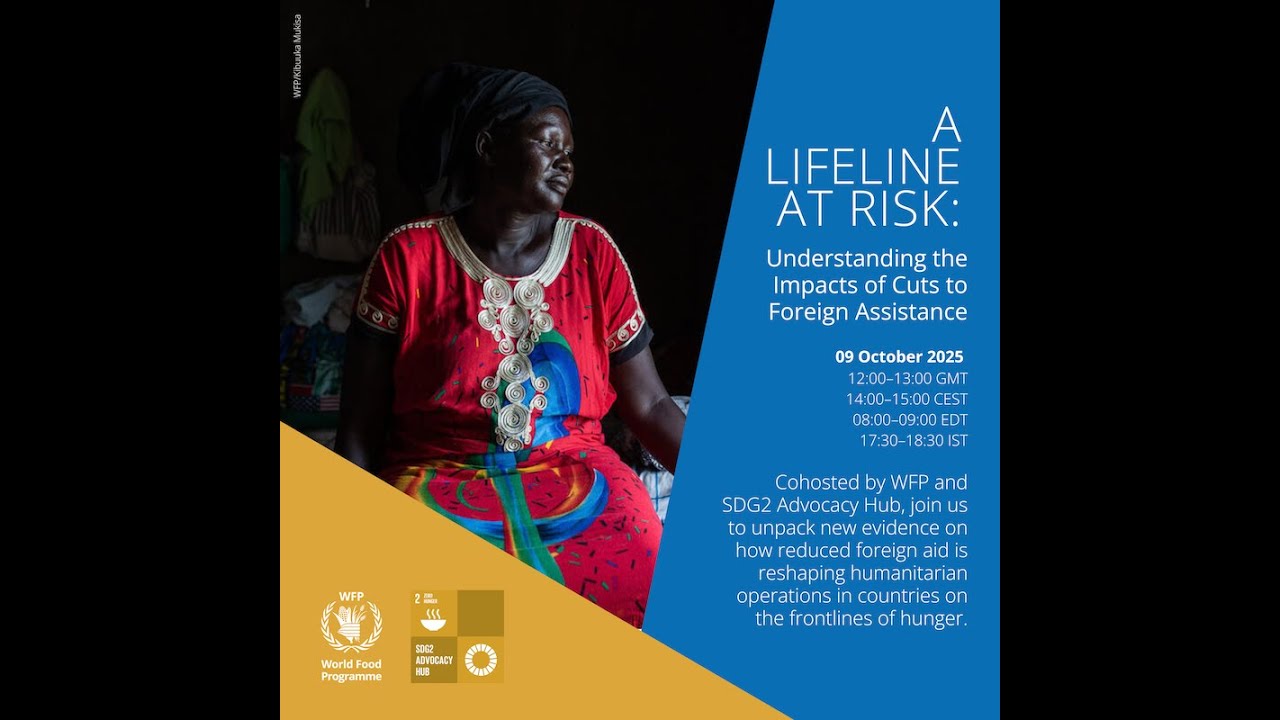
Webinar A Lifeline at Risk: Understanding the Impacts of Cuts to Foreign Assistance
Today, millions of vulnerable communities are facing unprecedented acute hunger and malnutrition challenges across multiple crisis-affected regions. The Global Report on Food Crises notes that acute hunger has grown for the sixth consecutive year, with over 295 million people in 53 countries facing high levels of acute food insecurity in 2024. In 2025, WFP estimates that at least 319 million people are projected to face acute food insecurity in countries.
At the same time, the global humanitarian landscape is undergoing a profound transformation, driven by an unprecedented crisis in international funding. As major donors scale back their commitments, the ripple effects are being felt across the humanitarian system—threatening the ability of organizations like the World Food Programme (WFP) and its partners to deliver life-saving assistance to millions. In 2025 alone, WFP is facing a staggering 40 percent reduction in funding, with projections of USD 6.4 billion compared to USD 9.8 billion in 2024.
In response to this challenge, WFP initiated a study to examine the food security implications of the funding crisis. The first phase of the research revealed alarming projections: dramatic reductions in WFP’s reach could severely undermine global food security. Building on these findings, the second phase focused on country-level realities—exploring how reduced foreign aid is reshaping humanitarian operations and affecting the lives of vulnerable populations. The study was conducted in six countries—Afghanistan, Haiti, Niger, South Sudan, Uganda, and Yemen—each offering distinct political, economic, and social contexts that reflect the diverse settings in which these cuts are unfolding.
Co-hosted by the SDG2 Advocacy and the UN World Food Programme, this webinar aims to present and unpack the key findings of this report to provide much-needed clarity on the impact of the funding cuts on food insecurity in an increasingly complex environment and to underscore the human cost of inaction.