
 Deep-Ocean Stewardship Initiative
126d ago
Deep-Ocean Stewardship Initiative
126d ago
▶
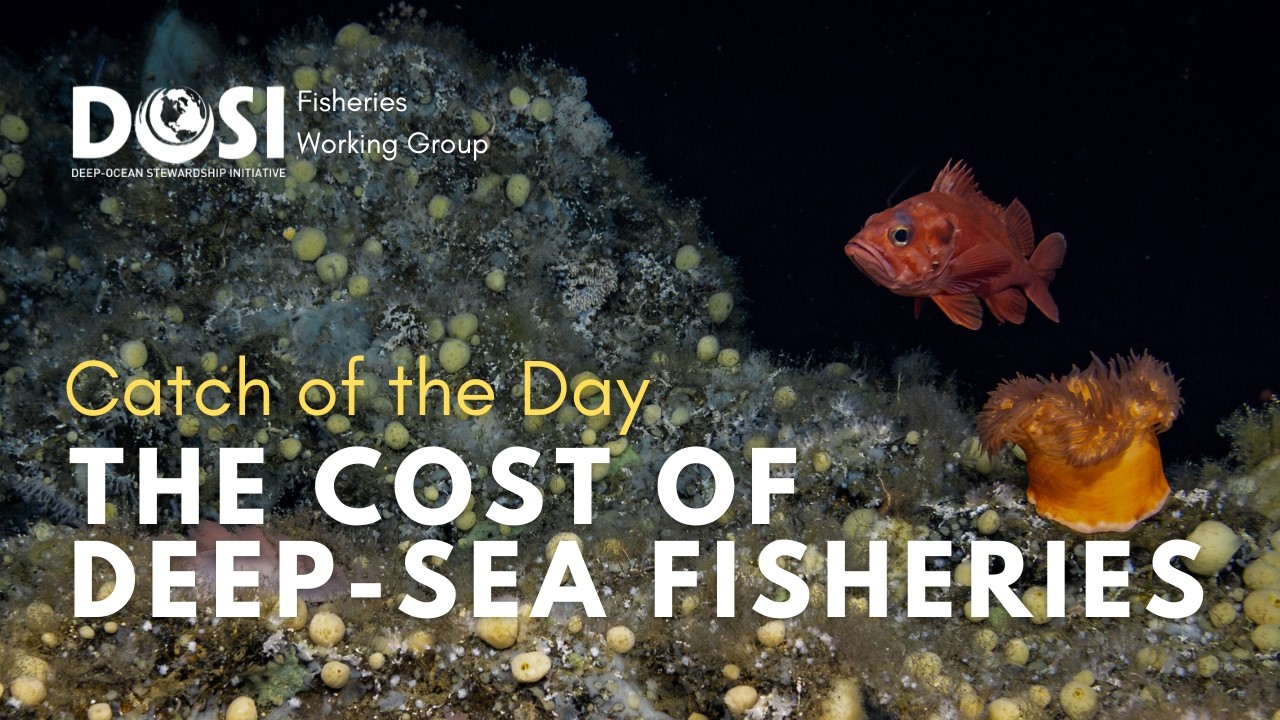
Catch of the Day: The Cost of Deep-Sea Fisheries
Deep-sea fisheries have been operating at an industrial scale since the 1950s, employing a variety of mid-water and bottom-contact gear to target stocks between 200 and 1000 m deep. Yet, these fisheries can cause disproportionate harm to marine biodiversity. Exploiting deep-sea fish resources without regard for this environmental harm not only affects a single species - it can damage entire ecosystems, endanger vulnerable biodiversity, disrupt the ocean’s role in climate regulation, and weaken food webs supporting commercially important species.
Managing deep-sea fisheries is complex, but there is growing recognition among policymakers on the importance of impact assessments and a precautionary approach. Continued collaboration, education and cooperation, guided by science, are crucial to implement effective policies to minimise the impacts of deep-sea fisheries and meet agreed conservation commitments.
The Deep-Ocean Stewardship Initiative’s Fisheries Working Group brings together scientists from different disciplines and countries to provide advice, research and practical tools to improve collective understanding of deep-sea fishing impacts, protection of vulnerable habitats, and the importance of conserving the deep ocean.
Find out more about deep-sea fisheries in this video!
Interested in advancing deep-ocean science in policy? Join the global DOSI network today! https://www.dosi-project.org/
This video is a DOSI production created in collaboration with Leo Richards of @NaturalWorldFacts
Written by Elin Thomas (DOSI Communications Manager), with input from the DOSI Fisheries Working Group
Narrated and edited by Leo Richards (@NaturalWorldFacts)
Footage provided by:
- Schmidt Ocean Institute
- Earth Sciences New Zealand
- NOAA Ocean Exploration
- Artlist.io
#deepsea #fish #fisheries #science #ocean #nature