
Center for Disaster Philanthropy
The Ebola outbreak: How funders can support locally led response

The Ebola outbreak is escalating rapidly at a time when the global humanitarian aid environment is under significant strain. Following major funding cuts and policy shifts in 2025 that weakened hea...

Philanthropic giving often spikes after high-profile disasters. Yet, crises that layer conflict, political instability and large-scale humanitarian needs often pose barriers that deter engagement. ...

Complex humanitarian emergencies – where conflict, political instability and crises such as human suffering, climate shocks and widespread poverty are layered together – are among the most underfun...

“When conflict and disaster force women and girls to flee their communities and homes, they face grave danger … As livelihoods and safety nets vanish in emergencies, rates of gender-based violence ...

“Grassroots mutual aid trusts those most impacted by disasters to know what they need and provides the ability to self-advocate, rather than prescribing a one-size-fits-all solution.”
~Miriam Belb...

Flash floods are the most dangerous type of natural hazard in the U.S., consistently causing the highest number of fatalities each year. Sadly, recent weeks have provided proof of that with floodin...

In this webinar, we explored critical strategies and real-world examples to enhance resilience to hazards and emergencies.
Disaster preparedness is a process that identifies vulnerabilities within...

Since Jan. 7, Los Angeles, the second-largest city in the U.S., has been burning. Entire neighborhoods have been decimated, and Altadena, a community in L.A. County with a rich history of Black hom...

“Prediction, not narration, is the real test of our understanding of the world.”
― Nassim Nicholas Taleb, The Black Swan: The Impact of the Highly Improbable
We live in a time of uncertainty. Our ...

The impact of Hurricanes Helene and Milton, which hit Florida two weeks apart, went well beyond the catastrophe from the storms.
Communities along the Gulf Coast and southeastern U.S. felt the dev...
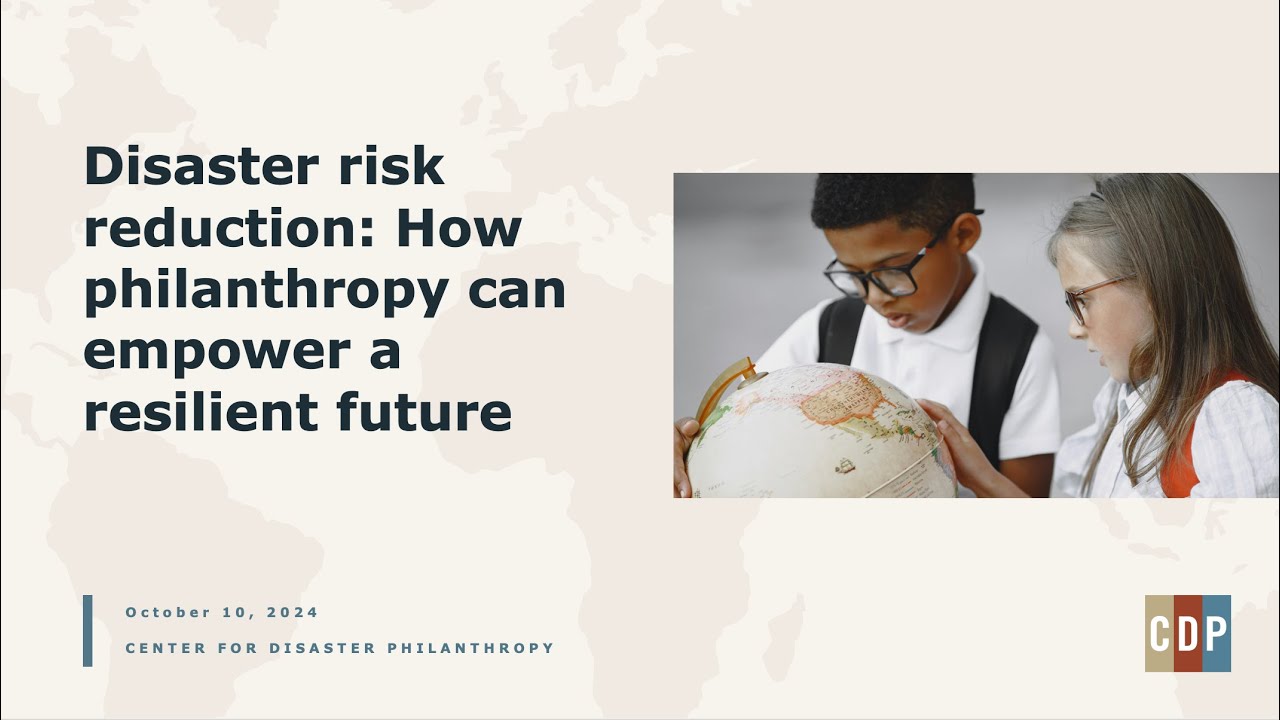
Disaster risk reduction (DRR) helps communities by “preventing new and reducing existing disaster risk and managing residual risk.”
In recognition of October’s International Day for Disaster Risk ...

Hurricane Helene was a monster storm, one of the biggest on record to hit the U.S. It made landfall as a Category 4 storm near Perry, Florida on Sept. 26, bringing devastating, widespread impacts a...
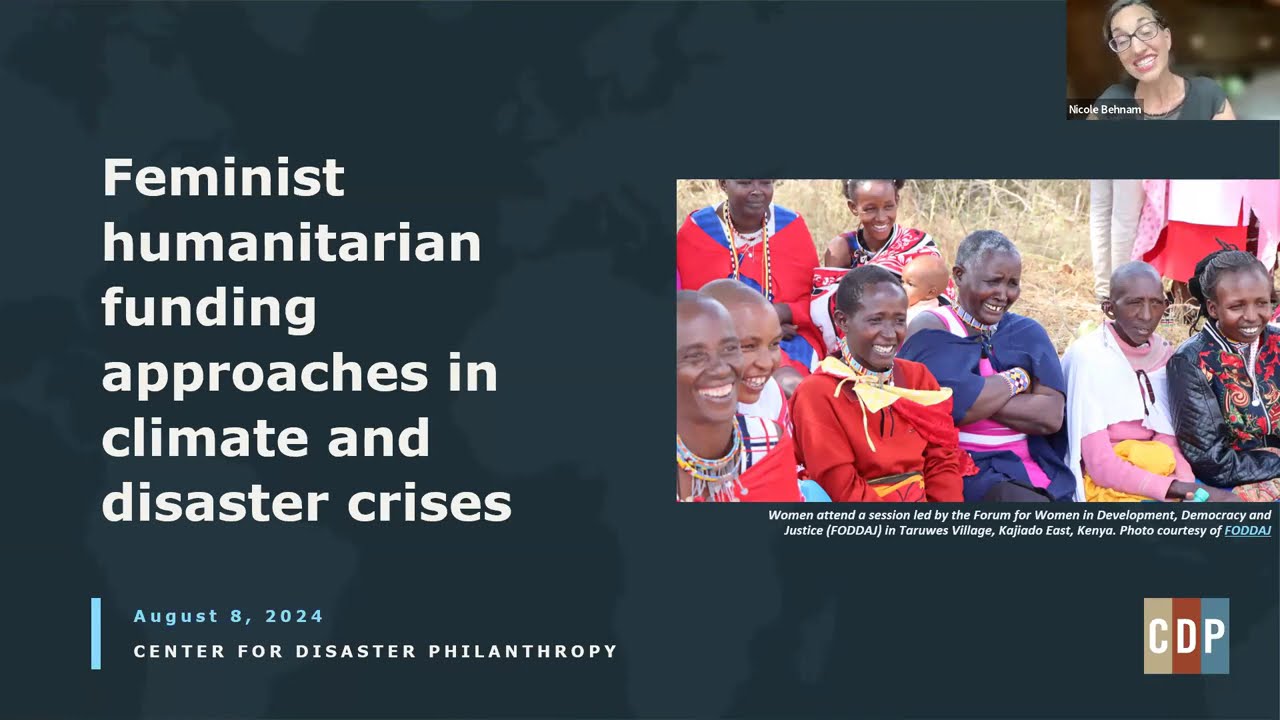
Women, girls and gender-diverse people are disproportionately affected by disasters, especially those who have preexisting vulnerabilities because of structural inequities.
Women and children are...

How we think and talk about disasters influences our responses, including decisions on what crises and communities to support, and how and when we provide critical philanthropic resources.
By cont...
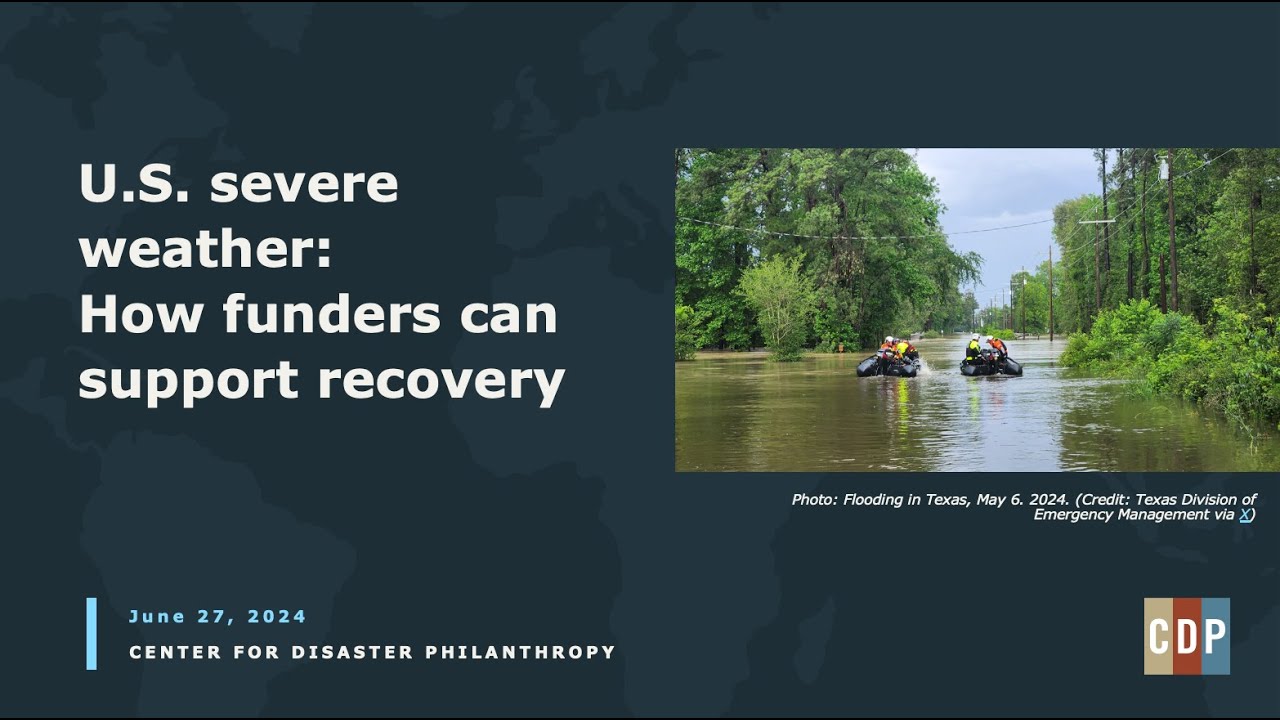
Globally, extreme weather disasters occur every day. According to the World Meteorological Association, 50% of all recorded disasters between 1970 and 2019 were due to weather, climate and water ha...

Insurance is an incredibly helpful resource for families after a disaster, but not everyone can afford it. Many mortgage brokers and banks require insurance to approve home loans. Increasingly, ins...

Extreme heat is the number one weather-related killer in North America and many other parts of the world. It kills more people in the U.S. than hurricanes, tornadoes and floods combined.
Human-cau...
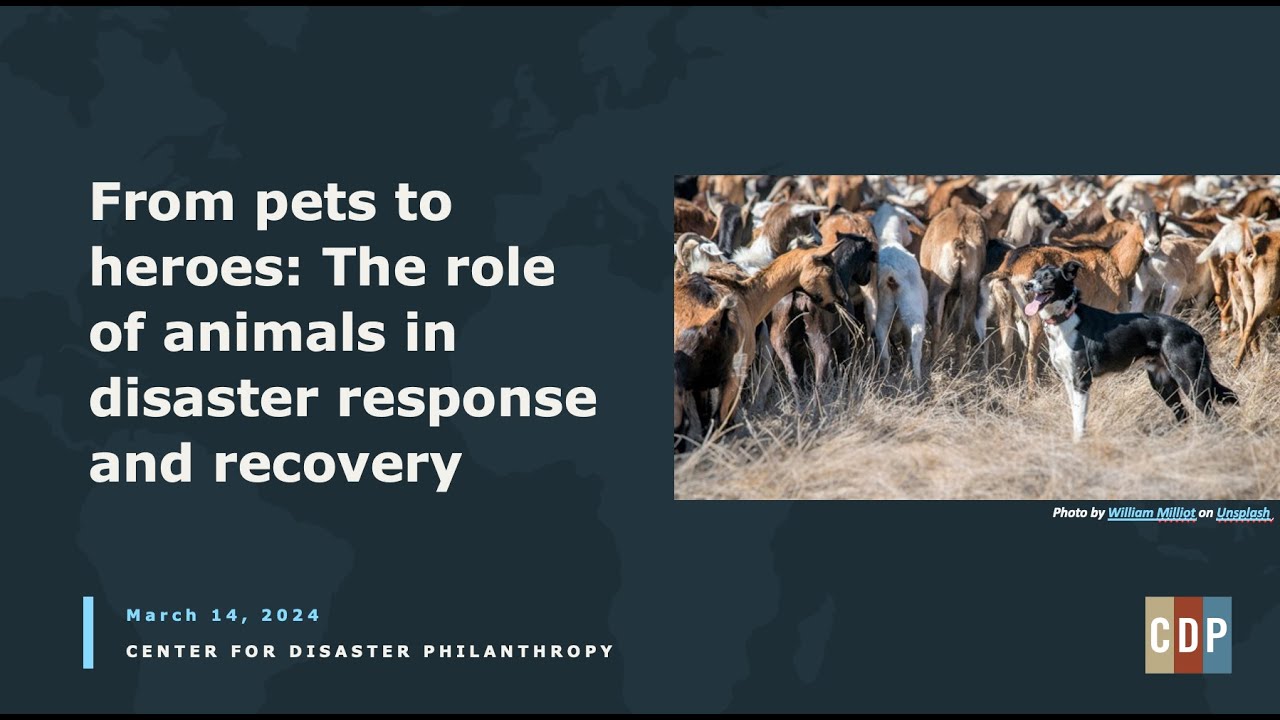
Disasters affect animals in many ways. For example, the 2019-2020 Australian bushfires saw huge funder interest when nearly three billion animals, including more than 60,000 koalas, were at risk.
...

Media has a critical role to play before, during and after a disaster. When a big crisis hits, national and international media outlets send cameras and reporters to the scene to cover the story. B...

One in three people worldwide (2.83 billion people) cannot afford a healthy diet. Hunger affects everything in a person’s life: physical health, mental health and cognitive development.
Hunger and...