
 WCS Mesoamerica y El Caribe
5h ago
WCS Mesoamerica y El Caribe
5h ago
▶
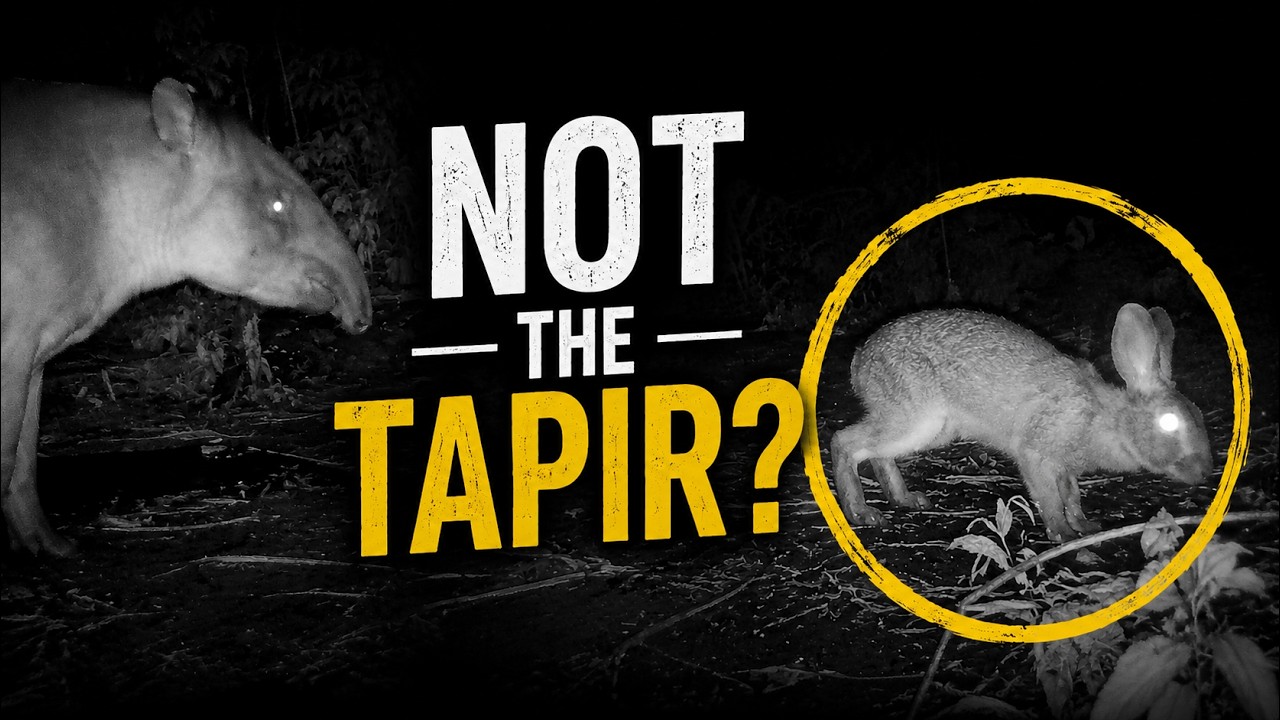
Camera traps reveal it wasn't the tapir after all
What if the culprit wasn't who we thought?
In communities of Honduras' Moskitia region, losses in cassava (Manihot esculenta) crops were often attributed to tapirs, armadillos, and pacas.
But a study using camera traps and non-invasive technology revealed a different reality.
The records showed that the Honduran cottontail (Sylvilagus hondurensis) was the species most frequently detected feeding on cassava, while Baird's tapir (Tapirus bairdii)—although present—did not appear to be the main cause of the damage.
In addition to the rabbit and the tapir, the cameras recorded rarely observed species such as the jaguarundi (Herpailurus yagouaroundi), highlighting the importance of these landscapes for wildlife.
The research also evaluated the use of motion-activated lights as a tool to monitor wildlife and help reduce conflicts between communities and wildlife.
Understanding which species actually interact with crops is key to designing solutions that benefit both communities and biodiversity conservation.
The research was funded by the Biodiverse Landscapes Fund (BLF), with support from the Wildlife Conservation Society (WCS), the Protected Areas and Wildlife Management Fund (FAPVS), and other partner organizations committed to conserving the forests of La Moskitia.
Read the full article here: neotropical.pensoft.net/article/187958/
Read the full story here: dub.sh/Tapir-Rabbit-HN
#Moskitia #Honduras #Conservación #FaunaSilvestre #CámarasTrampa #BiodiverseLandscapesFund #BLF