
 The New Humanitarian
39d ago
The New Humanitarian
39d ago
▶
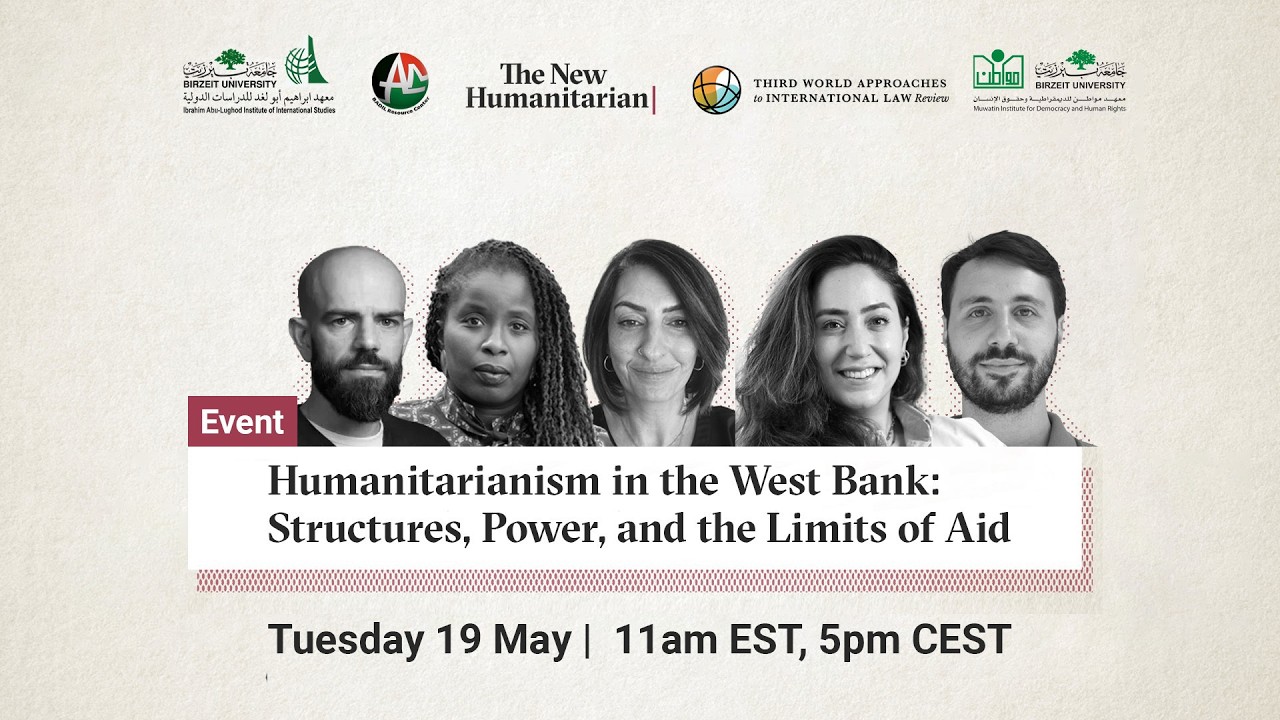
Humanitarianism in the West Bank: Structures, Power, and the Limits of Aid
This webinar traces how humanitarian action in the West Bank has evolved and how these actors operate within a broader landscape of occupation, violence, and structural injustice.
By examining humanitarian practice through structural, political, and moral lenses, we will ask what it means to “do no harm” in a context where aid can both alleviate suffering and entrench the very systems that produce it.
Together with practitioners and scholars, we will explore the limits of existing humanitarian frameworks and why, without meaningful accountability and radical change, current systems struggle to contribute to a more equitable and transformative future. The discussion will consider alternatives grounded in solidarity rather than charity, centering local agency, Palestinian perspectives, and long-term justice rather than short-term relief.
This event was moderated by Layth Hanbali, Researcher at Institute for Palestine Studies and PhD candidate, and was joined by:
Tammam Aloudat | CEO, The New Humanitarian
Matiangai Sirleaf | Nathan Patz Professor of Law, University of Maryland Francis King Carey School of Law
Bushra Khalidi | Global Humanitarian Policy Lead, Oxfam
Lubnah Shomali | Palestinian human rights defender and activist, BADIL
This event was convened by The New Humanitarian in collaboration with BADIL Resource Center for Palestinian Residency and Refugee Rights, The Third World Approaches to International Law Review, Birzeit University Muwatin Institute for Democracy and Human Rights and Birzeit University Ibrahim Abu-Lughod Institute of International Studies.