

Asia Pacific Leaders Malaria Alliance (APLMA)
Expanding Pediatric Antimalarial Treatment | APMEN TechTalks
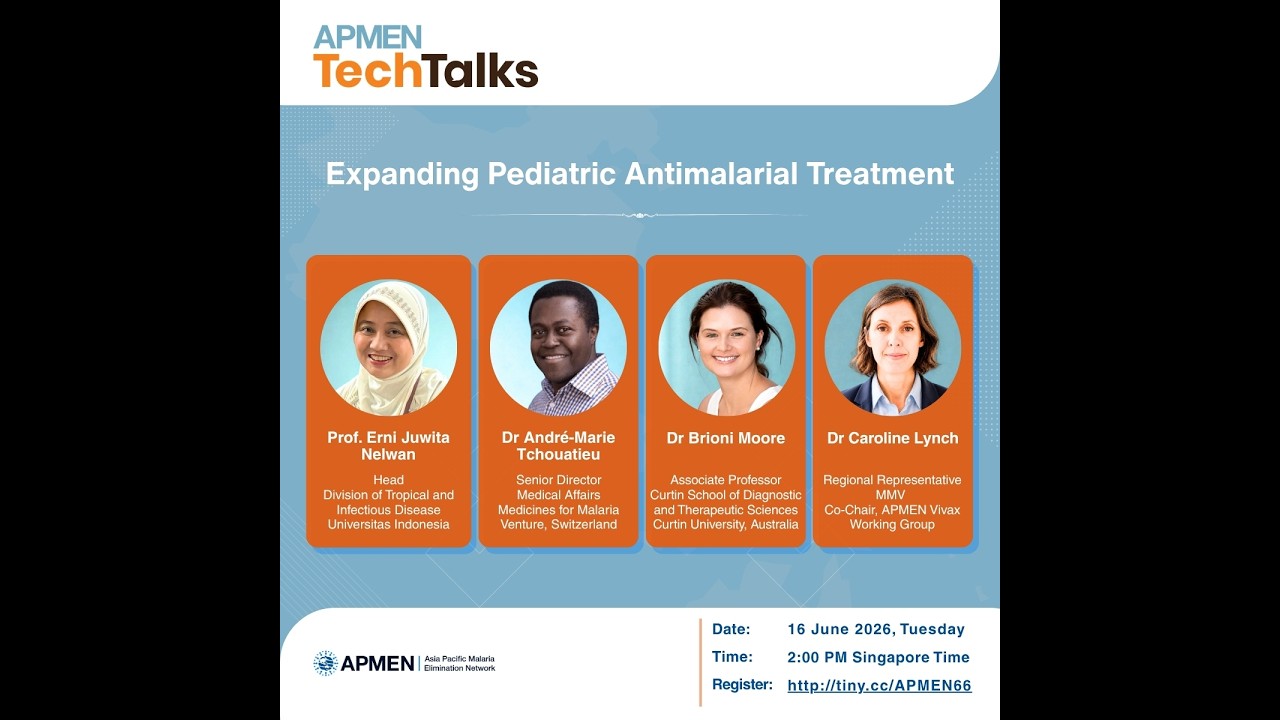
Malaria remains a major cause of illness among children in many countries, where both Plasmodium vivax and Plasmodium falciparum are endemic. Recurrent infections can lead to anaemia, poor health o...
Vulnerability and Health System Resilience to Climate Change | APMEN TechTalks
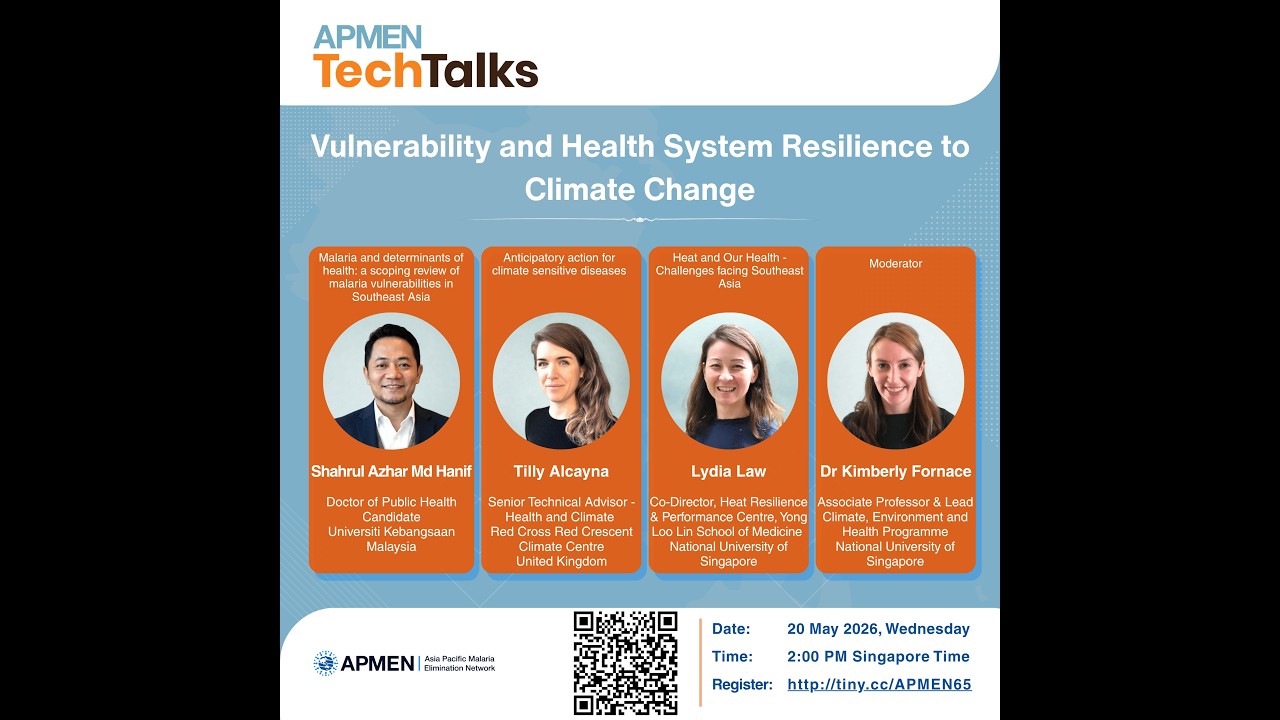
Climate change is intensifying health risks across the Asia Pacific region, placing increasing strain on already stretched health systems and deepening vulnerability to climate sensitive infections...
APMEN Online Climate Training Workshop - Day 3
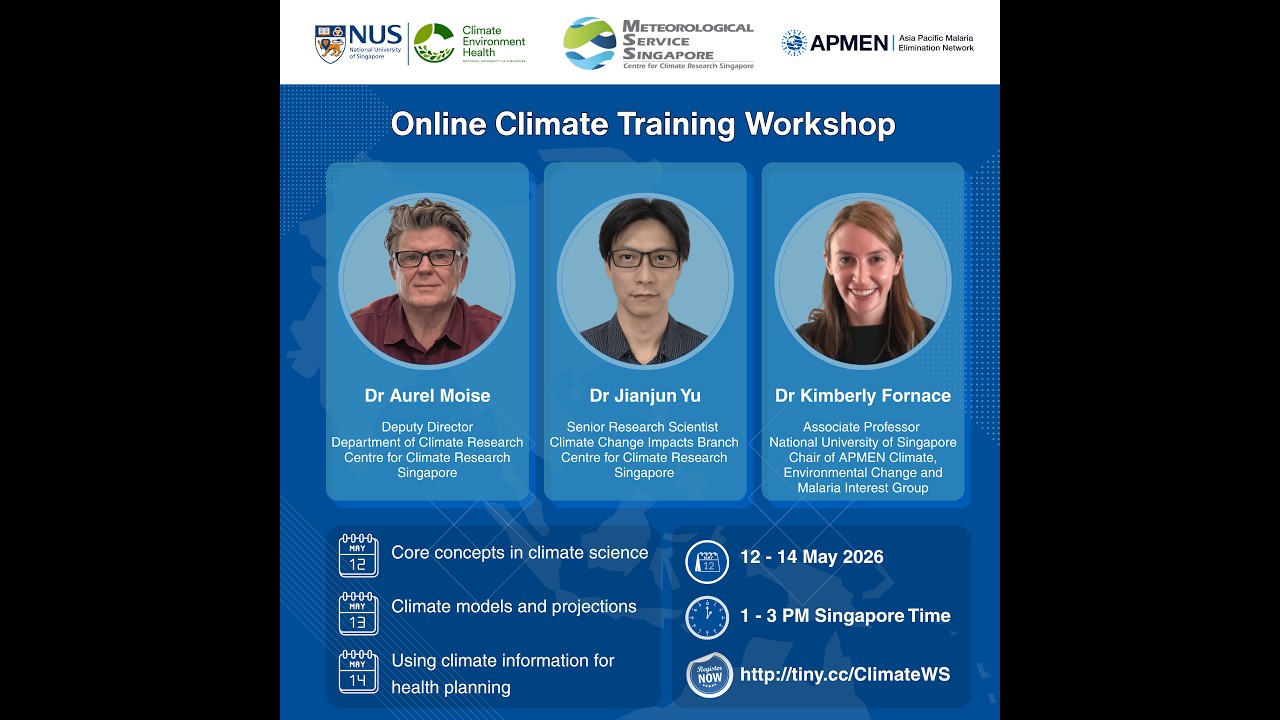
Online Climate Training Workshop: Understanding Climate Information, Models, and Dashboards for Health Planning
Co-hosted by
Climate, Environment & Health Programme, National University of Singapo
APMEN Online Climate Training Workshop - Day 2
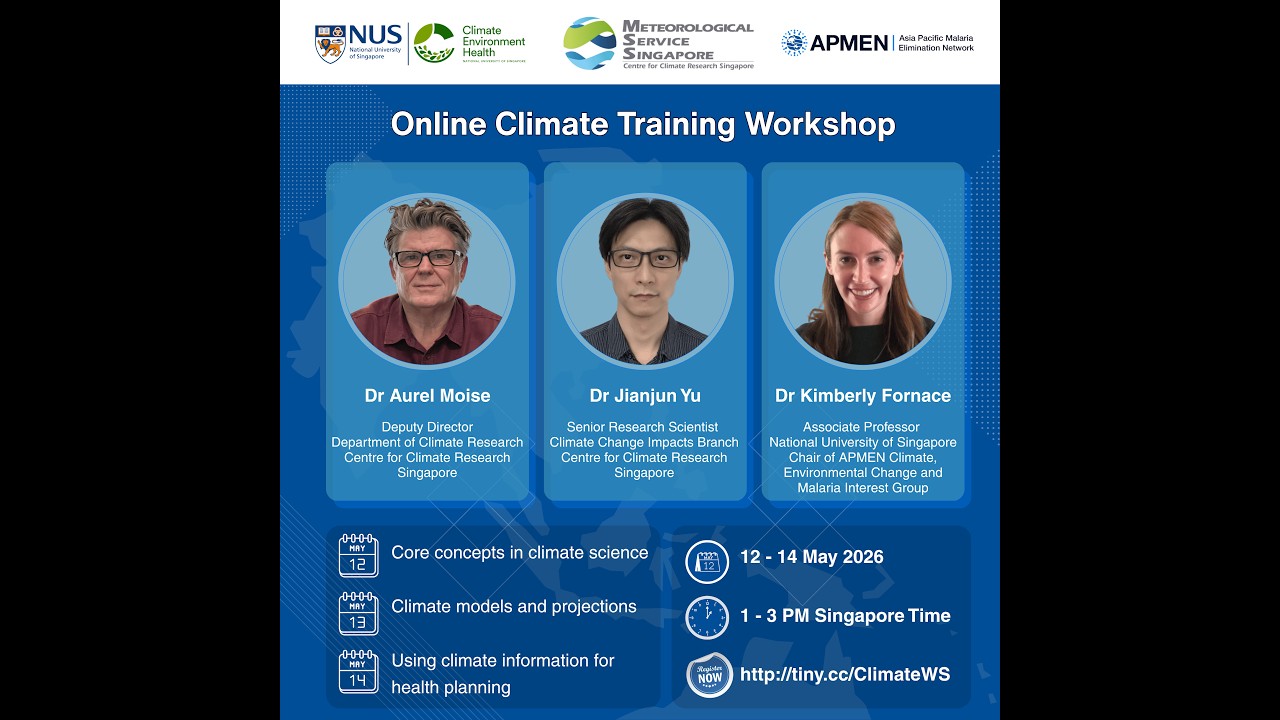
Online Climate Training Workshop: Understanding Climate Information, Models, and Dashboards for Health Planning
Co-hosted by
Climate, Environment & Health Programme, National University of Singapo
APMEN Joint Working Groups Meeting 2026

APMEN (https://apmen.org) is strengthening regional malaria elimination efforts through closer collaboration across its three technical Working Groups: Surveillance and Response, Vector Control, an...
APMEN Online Climate Training Workshop - Day 1
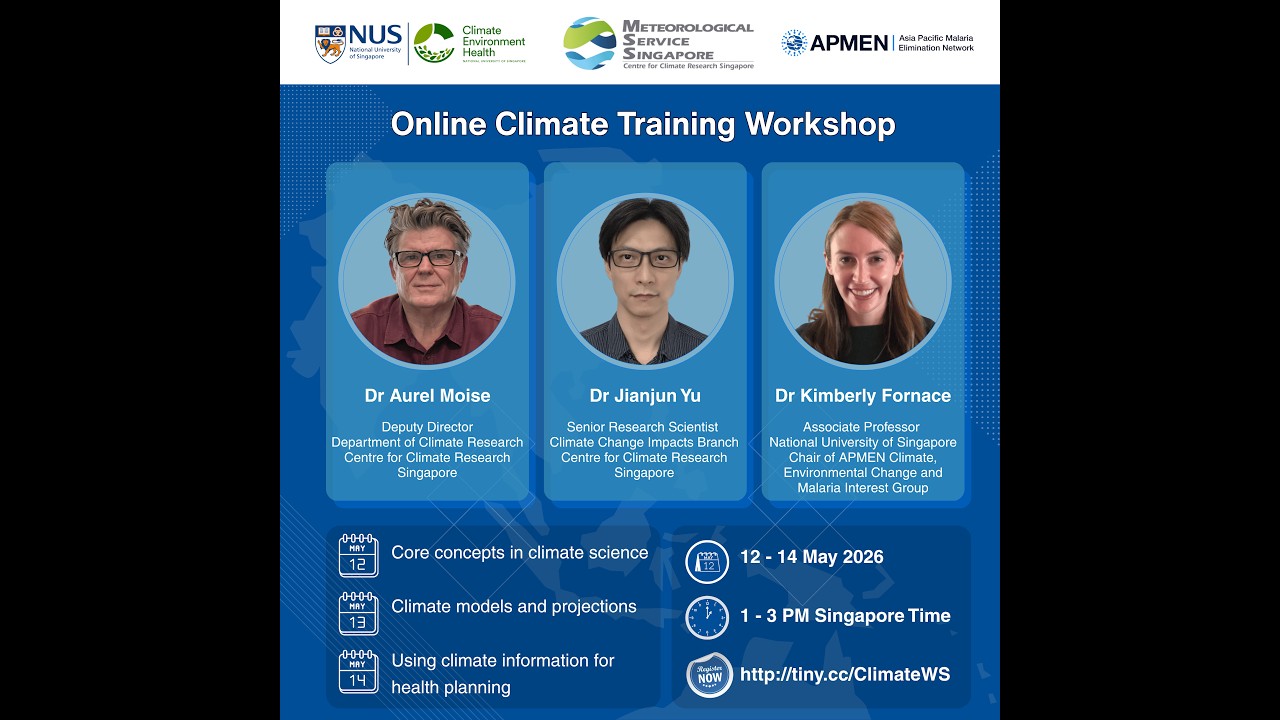
Online Climate Training Workshop: Understanding Climate Information, Models, and Dashboards for Health Planning
Co-hosted by
Climate, Environment & Health Programme, National University of Singapo
World Malaria Day Webinar "Malaria: Global Trends, Regional Insights and Country Action Plans"
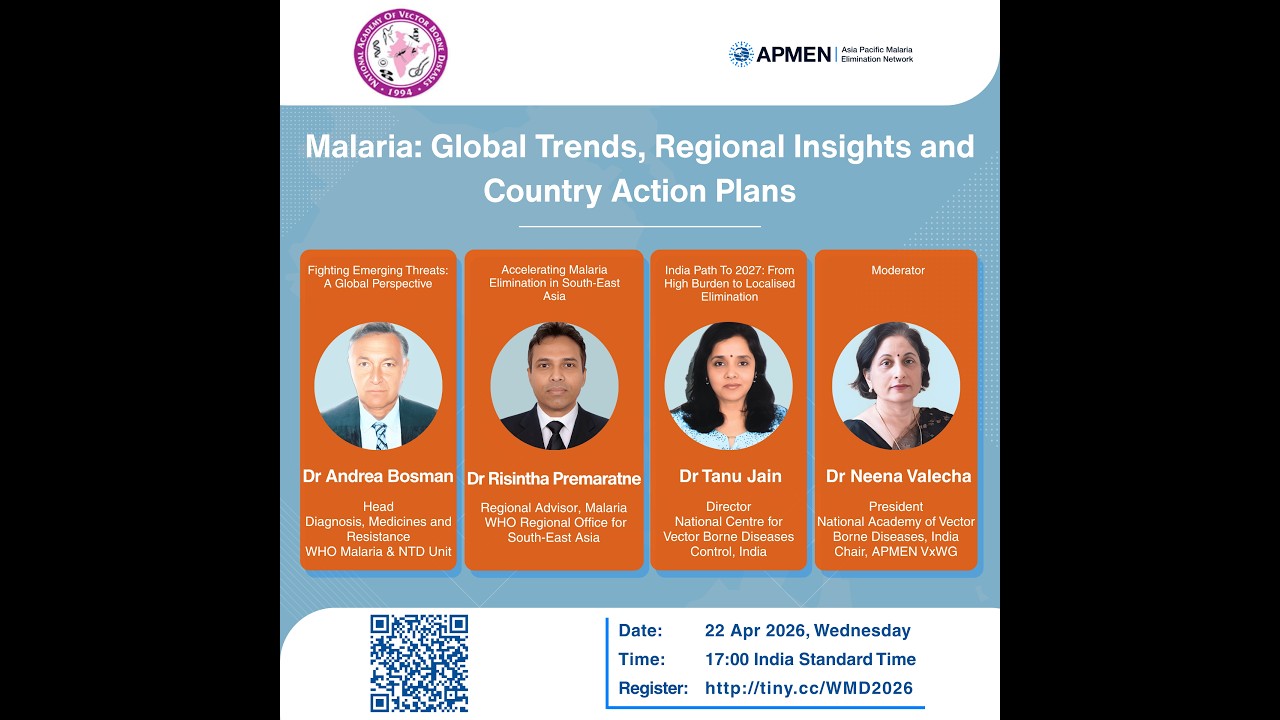
In commemoration of World Malaria Day 2026, this webinar aligned with the global theme “Driven to End Malaria: Now We Can. Now We Must”, a shared rallying cry for renewed commitment and collective ...
Africa-Asia Civil Society Dialogue: Strong Community Engagement Is Essential to Beat Malaria
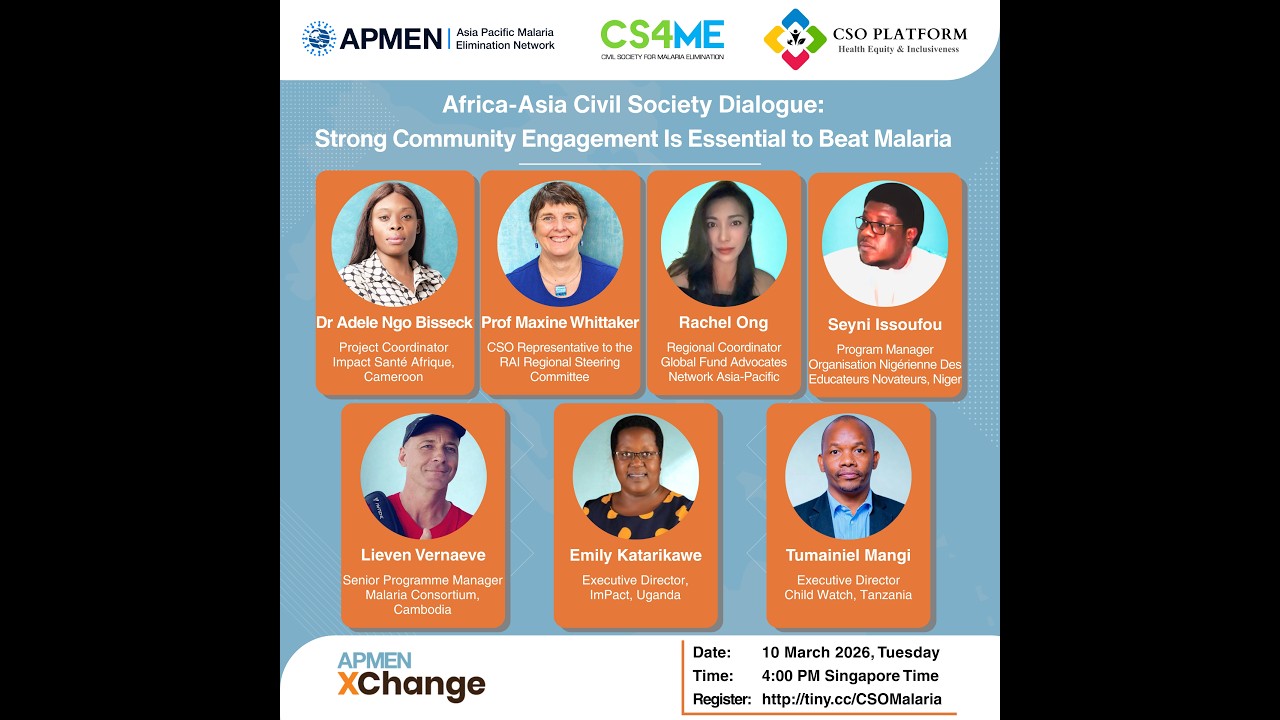
Community and civil society organizations (CSOs) are crucial in generating evidence and advocating for the mobilization of resources allocated to health, particularly in the fight against malaria. ...
APMEN Online Training on Vector Surveillance 2026 Day 3
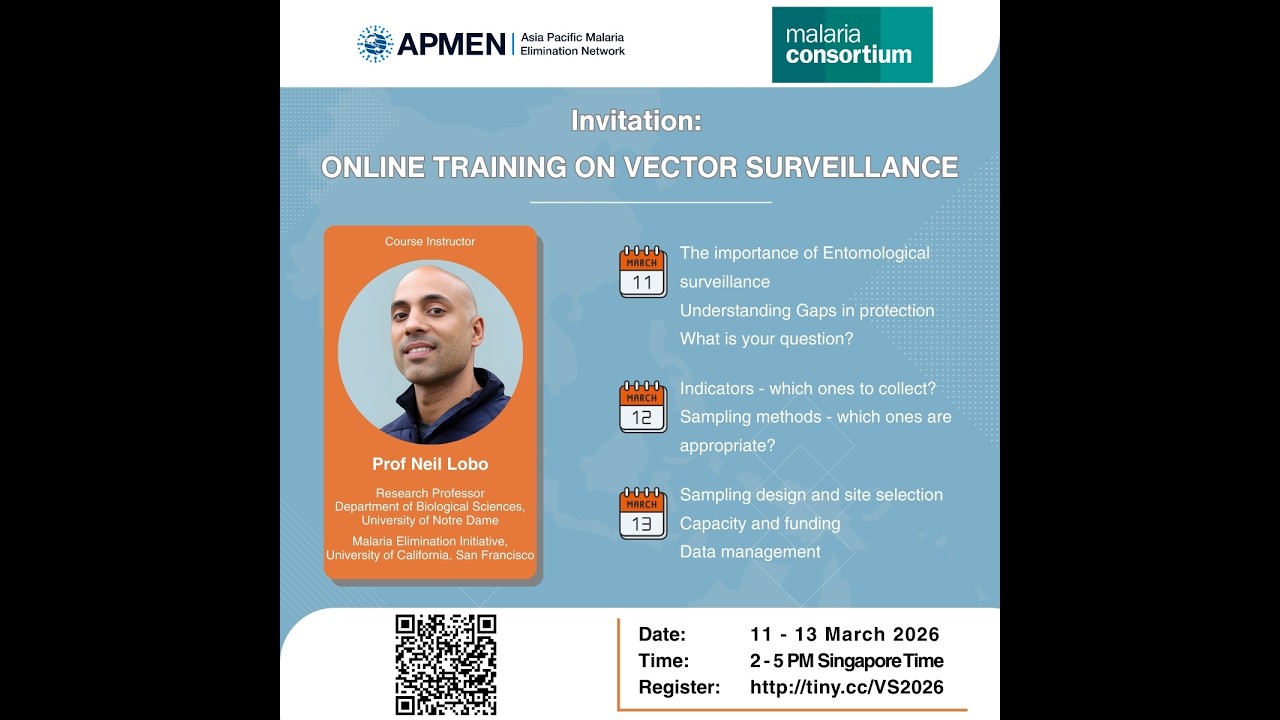
Vector control is the single most effective intervention for achieving a reduction in malaria transmission in most malaria endemic countries of the world. Such vector control must be underpinned by...
APMEN Online Training on Vector Surveillance 2026 - Day 2
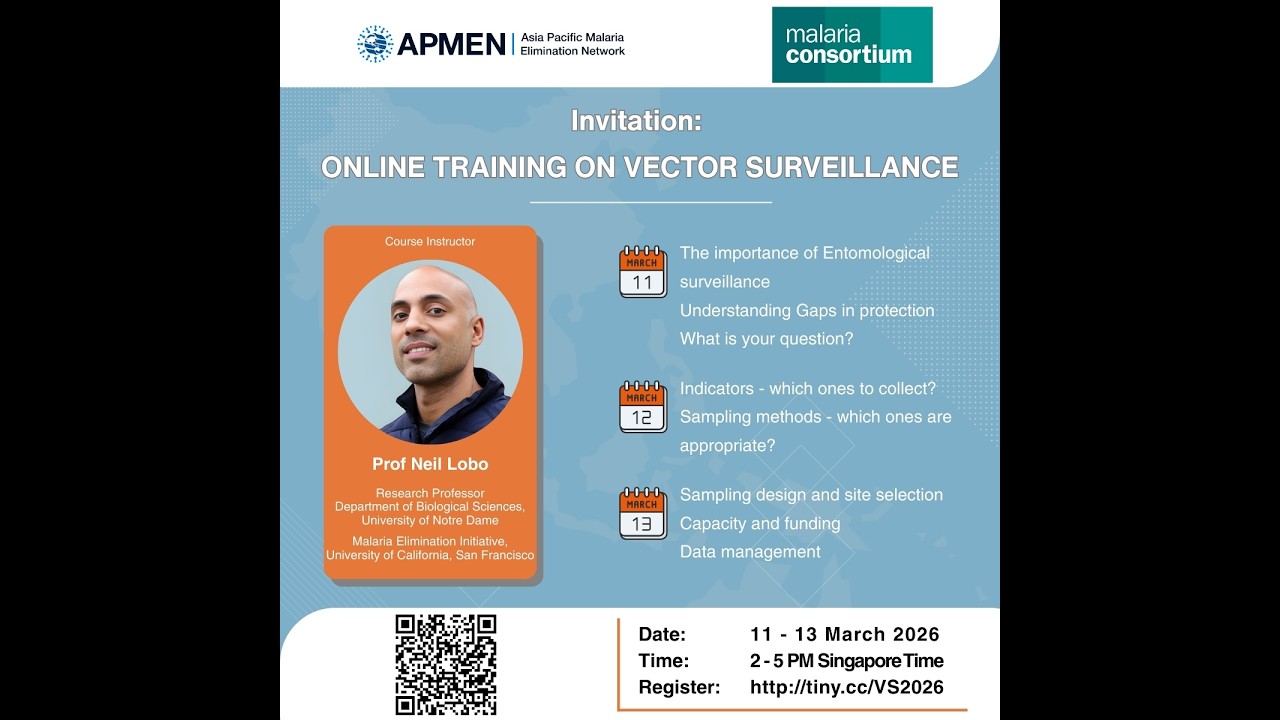
Vector control is the single most effective intervention for achieving a reduction in malaria transmission in most malaria endemic countries of the world. Such vector control must be underpinned by...
APMEN Online Training on Vector Surveillance 2026 - Day 1
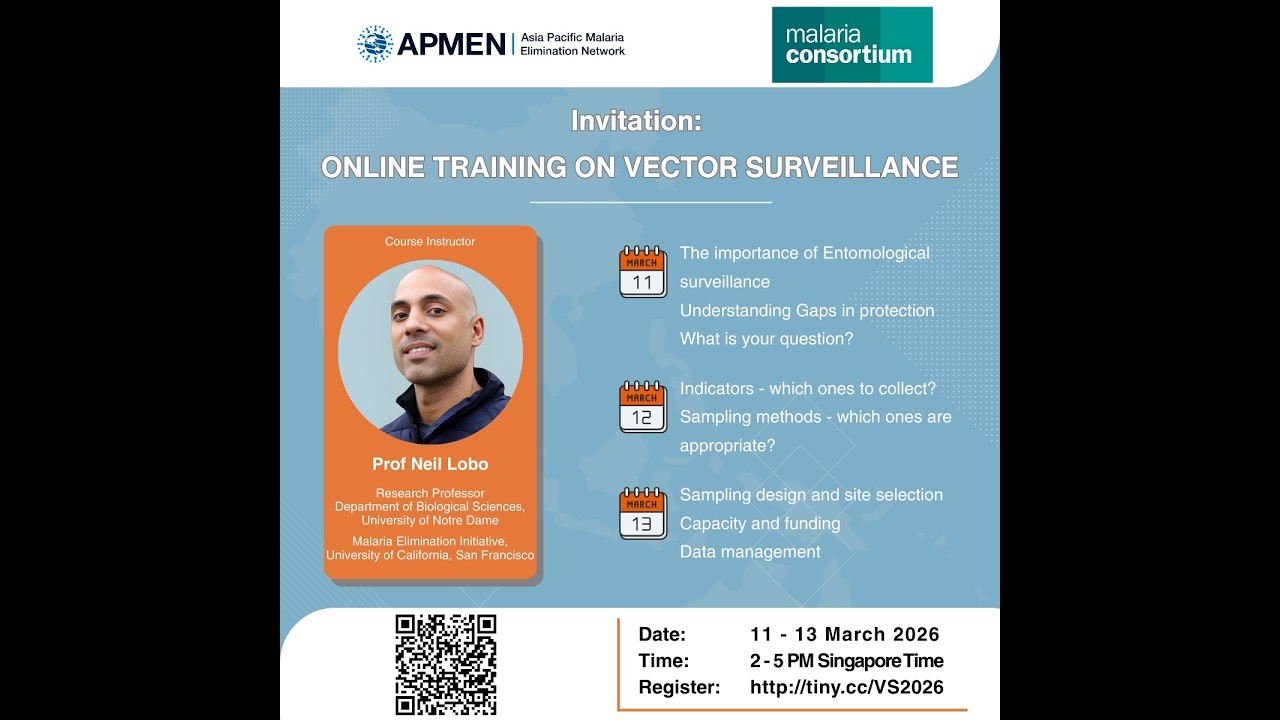
Vector control is the single most effective intervention for achieving a reduction in malaria transmission in most malaria endemic countries of the world. Such vector control must be underpinned by...
Public Health Approaches for Malaria Elimination Series: Mass Drug Administration for Vivax Malaria
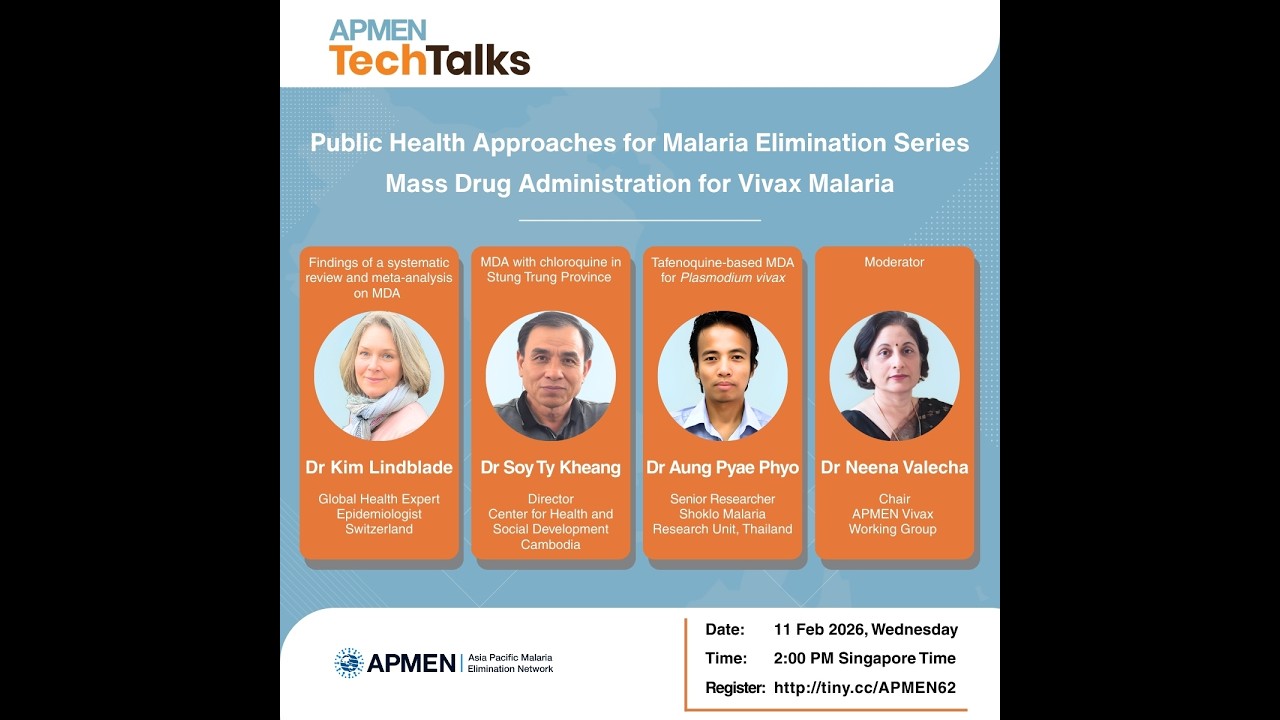
Mass drug administration (MDA) has garnered renewed attention as a strategic intervention to accelerate malaria elimination, particularly in low-transmission or pre-elimination settings. However, t...
Vector Control in Compromised Settings | APMEN TechTalks
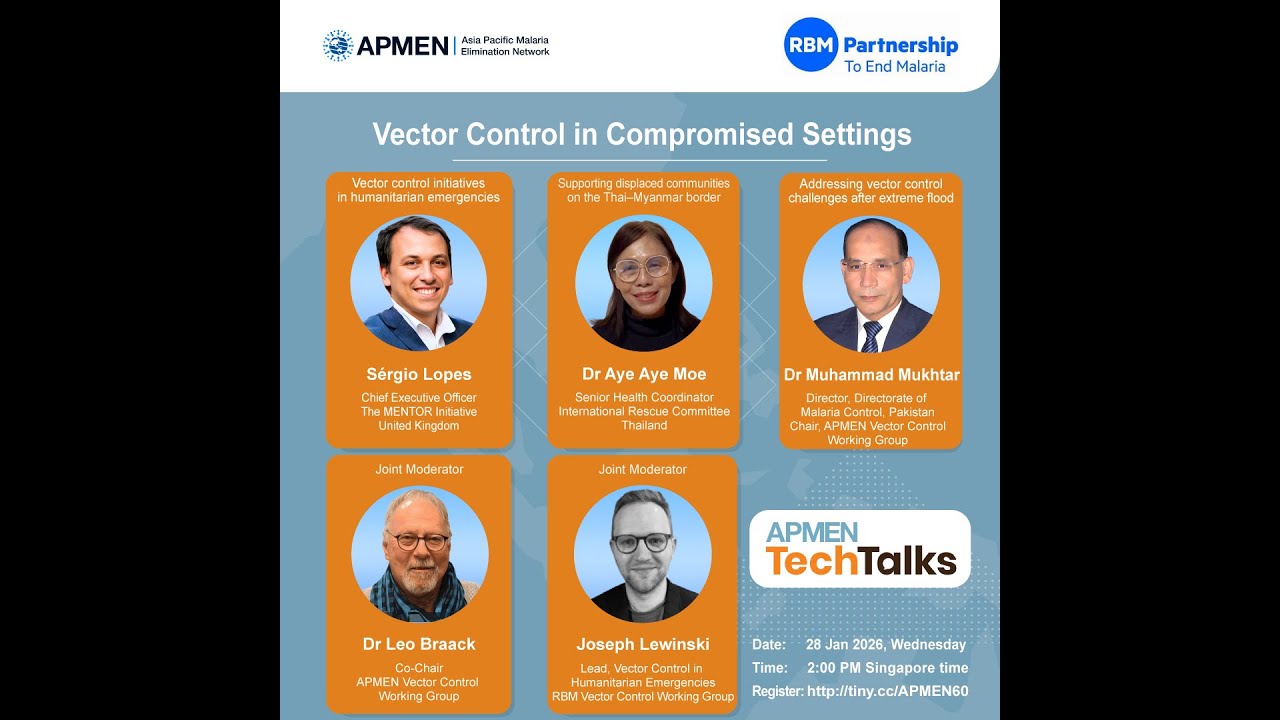
Vector control is our primary strategy to combat malaria in most parts of the malaria-endemic world, but is difficult to implement in situations of humanitarian emergencies, among migrant populatio...
Progress in Motion: APLMA Backing the Final Mile

Progress across Asia Pacific over the past decade is marked by exceptional resilience and an unwavering resolve to eliminate malaria by 2030. APLMA turns evidence into action – facilitating nationa...
Early Warning Systems for Vector Borne Diseases: Lessons from Dengue for Surveillance and Response
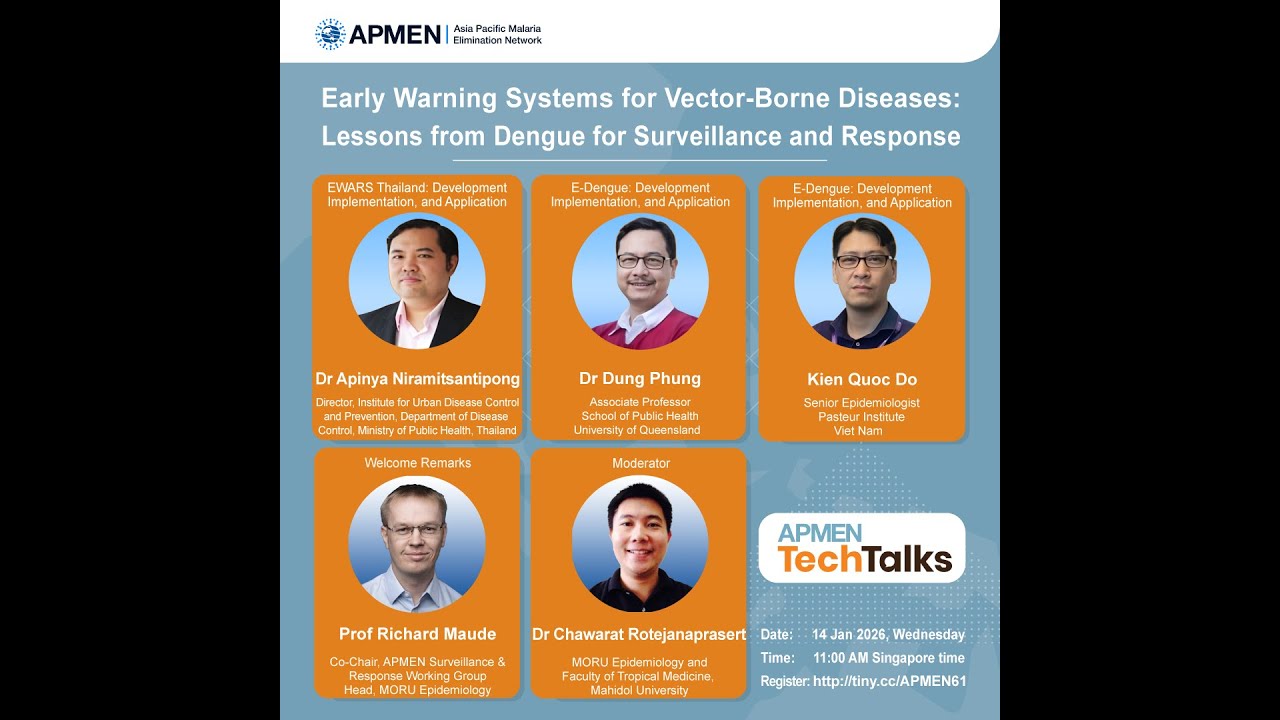
Early warning systems (EWS) are increasingly recognised as important tools for strengthening surveillance, preparedness, and response to vector-borne diseases. By integrating epidemiological, clima...
G6PD Testing for Radical Cure of Vivax Malaria: Current Implementation and Gaps | APMEN TechTalks
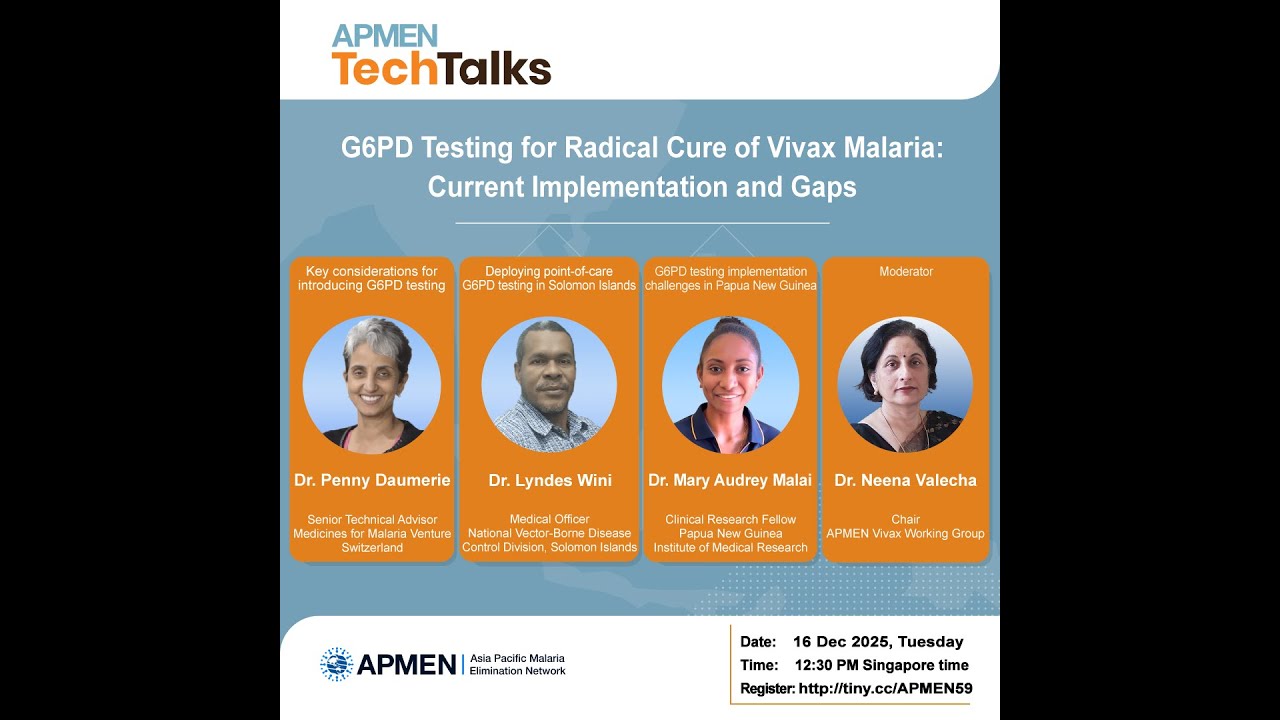
As countries in the Asia-Pacific move closer to malaria elimination, ensuring that every patient receives optimized and complete treatment has become a critical priority. Since primaquine and tafen...
Country Case Studies: Preventing the Re-establishment of Malaria Transmission | APMEN TechTalks
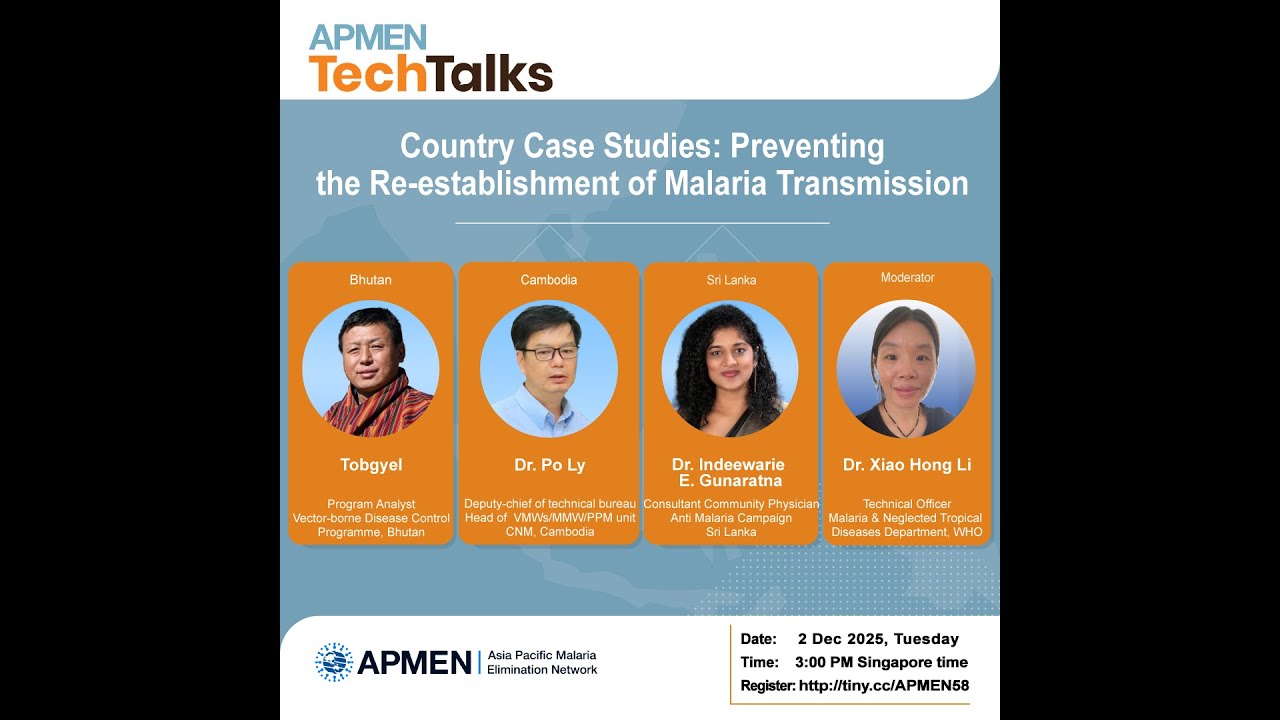
Preventing re-establishment requires strong systems to manage persistent challenges such as imported malaria, residual transmission risks, and health system vulnerabilities. Robust surveillance, ra...
APMEN Joint Working Groups and Interest Groups Update 2025
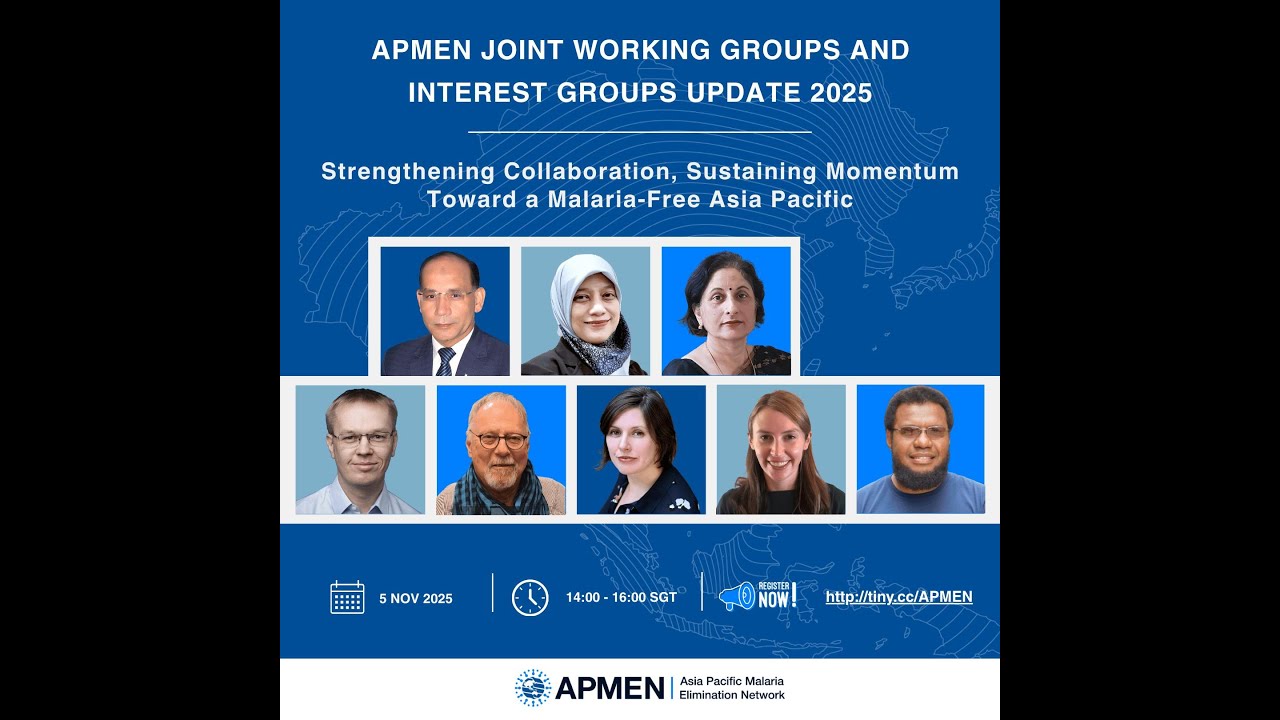
The APMEN Joint Working Groups and Interest Groups Update 2025 served as a strategic checkpoint to reflect on progress, recalibrate priorities, and strengthen coordination across APMEN’s three Work...
From Vision to Impact: APMEN’s Legacy in Advancing Malaria Elimination
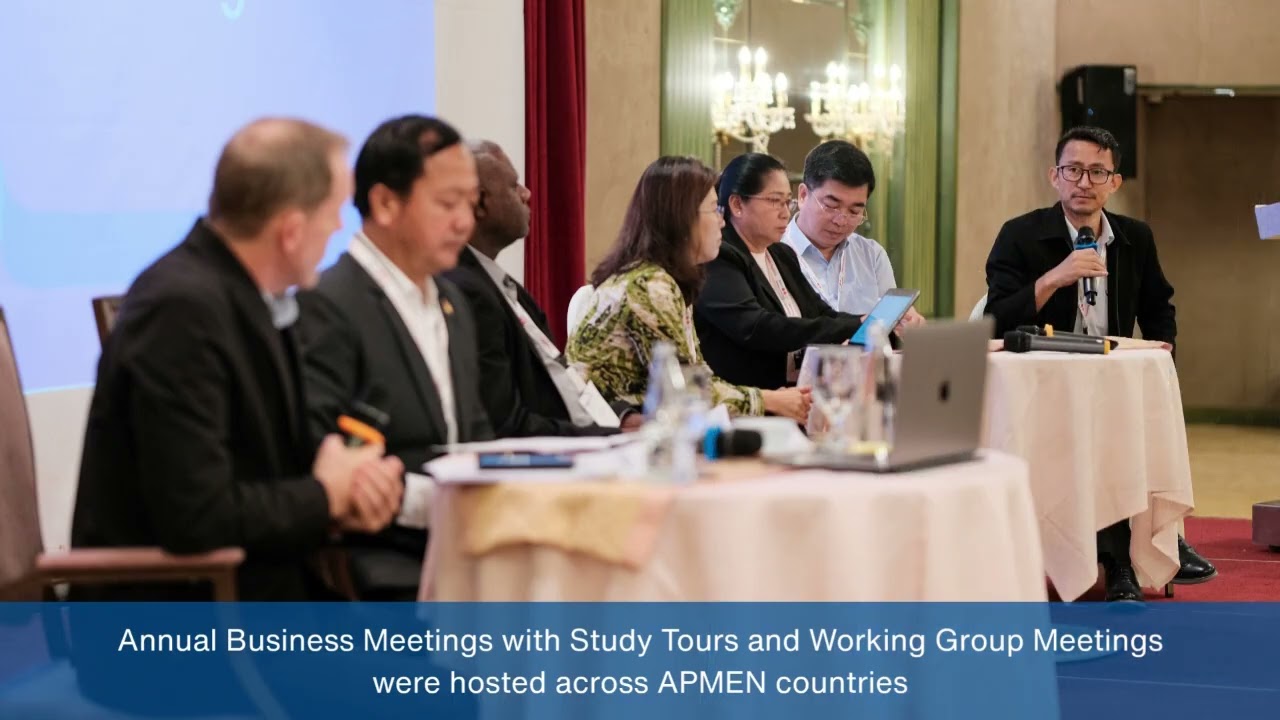
APMEN is a sustainable and collaborative network of 22 countries and 54 partner organizations working together to eliminate malaria in the Asia-Pacific region through knowledge exchange, peer-to-pe...
Prevention of Re-establishment of Malaria Transmission: Global Guidance | APMENxChange
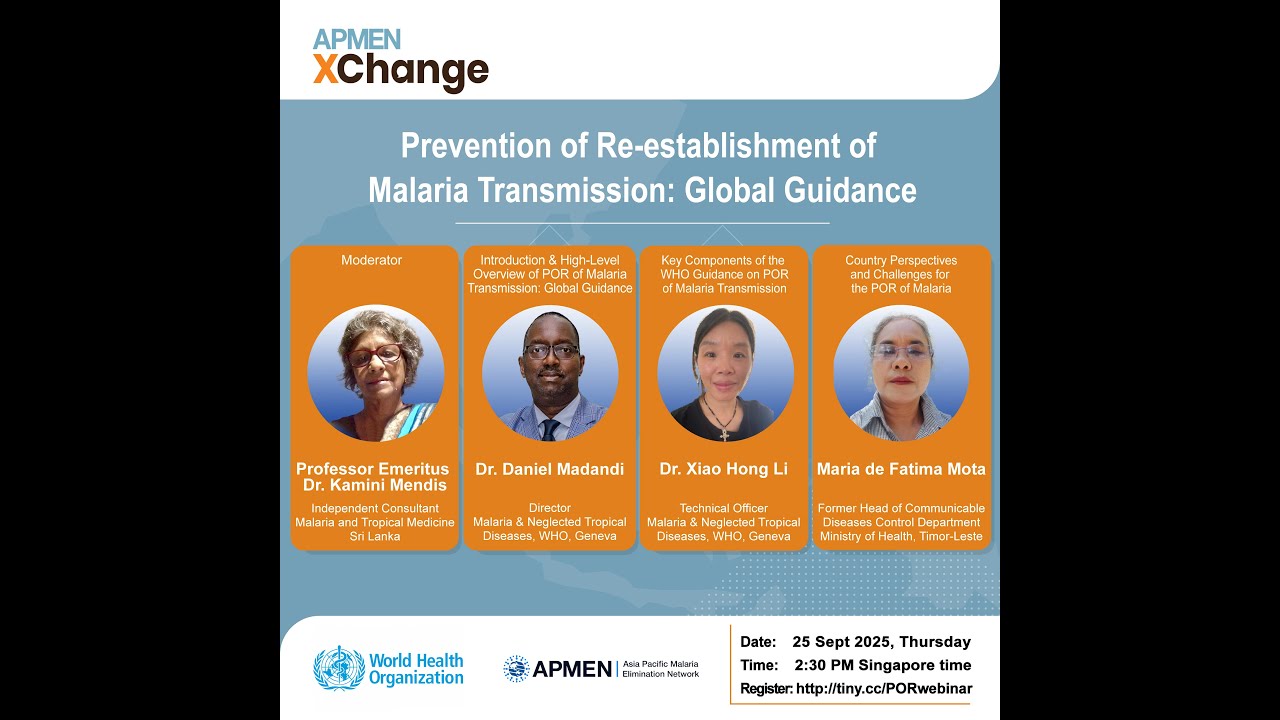
Prevention of re-establishment is one of the specific goals of the Global Technical Strategy for malaria (2016-2030), endorsed by World Health Assembly in 2015, With growing progress toward malaria...