
 NBSAP Forum
277d ago
NBSAP Forum
277d ago
▶
Webinar: Integrated spatial planning
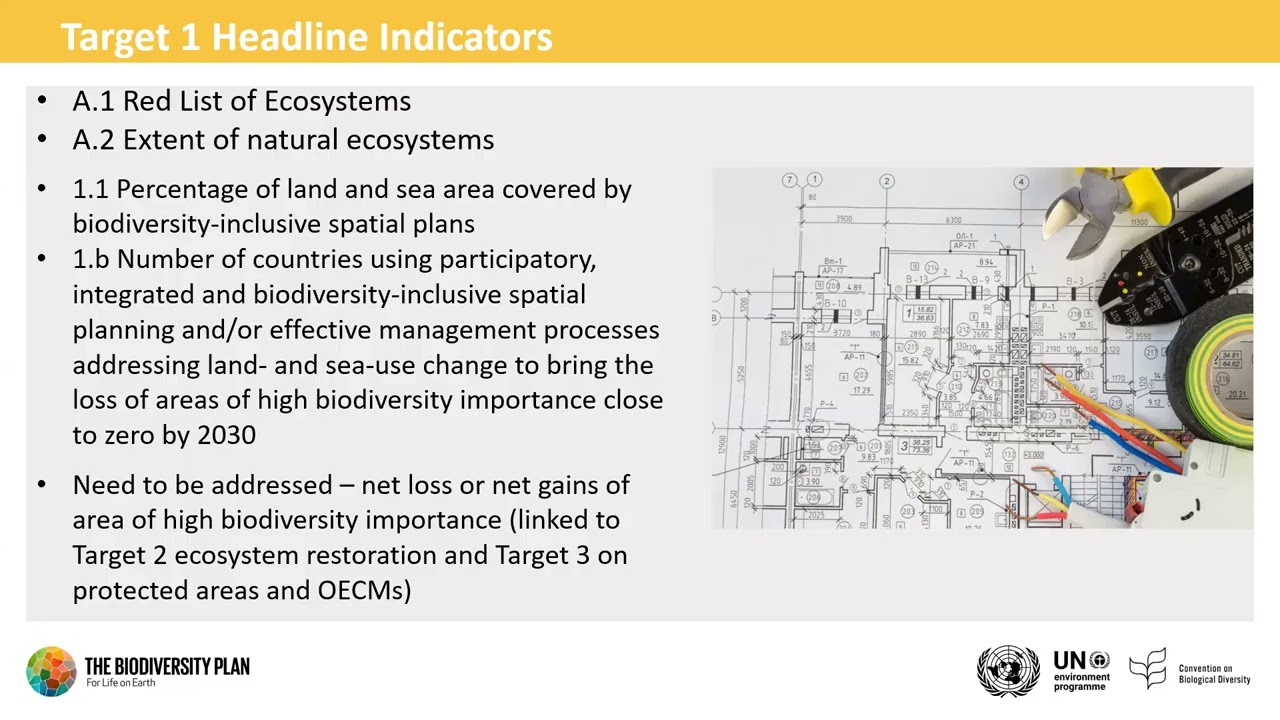
The Kunming-Montreal Global Biodiversity Framework (KMGBF) calls on countries to bring biodiversity loss close to zero by 2030 through participatory, integrated, and biodiversity-inclusive spatial planning and/or effective management processes. In particular, geospatial data is critical to achieving several KMGBF targets, including identifying the important areas for biodiversity for conservation (Targets 1 and 3), restoration (Target 2), and effective land- and sea-use planning and management (Target 1), with positive outcomes for KMGBF targets 4-12. Through spatial planning and effective use of global and national data, countries can also identify where to take action to achieve their national biodiversity targets and use these plans as a tool to mainstream biodiversity across governments policies (Target 14). Spatial data can also be used to strengthen 7th National Reports, due 28 February 2026.
This webinar will open with some background on spatial planning and its importance to achieve the ambitions of the KMGBF. The Secretariat of the Convention on Biological Diversity (CBD) will provide relevant context, with a specific focus on the regional integration through the Technical Support Centers (TSCCs), with a presentation from the Regional Centre for Mapping of Resources for Development (RCMRD) following. Participants will then hear from the Head of the Key Biodiversity Areas (KBA) Secretariat on the value of making updated assessments of globally significant sites for biodiversity; a case study from Mozambique will follow. Participants will then learn about the Essential Life Support Areas (ELSAs), an approach that can harness data on biodiversity – including the KBAs, climate change, and sustainable development – and help countries develop integrated spatial plans customized to their National Biodiversity Strategy and Action Plan (NBSAP). A case study from South Africa will help move the conversation from theoretical to practical, enabling participants to envision what these approaches could look like contextualized to their national circumstances, and how they can support national governments to meet their commitments to the CBD.